How Skincare Labels Turn Broad Products into Specific Choices
Learn how skincare labels distinguish product types, textures and intended uses, so you can compare bottles clearly and choose what fits your routine.
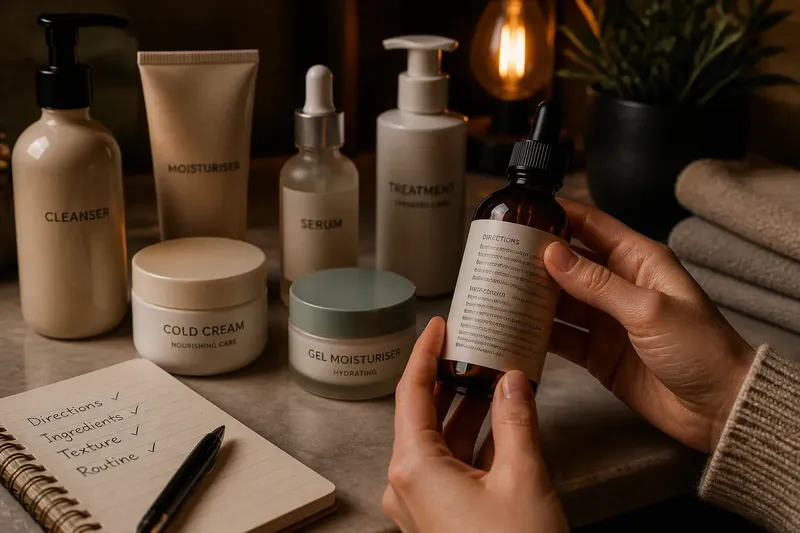
Skincare labels can make a familiar bottle sound like a specialist product, so compare the wording with the directions and ingredients before deciding what it offers. A cleanser, moisturiser or serum still needs to make sense for your own routine; its name alone cannot tell you how it will feel or suit you.
Product categories give shoppers more specific language
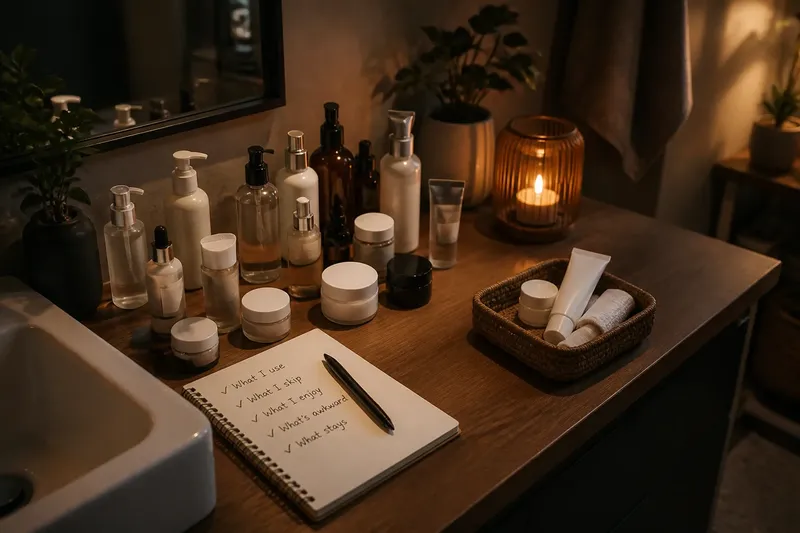
Imagine a shop shelf with a cleanser, a moisturiser and a jar of cold cream beside bottles labelled serum, gel moisturiser and targeted treatment. This is an illustrative contrast, not a claim about how every household shelf used to look. It shows how product names can divide broad everyday uses into narrower categories.
A category name is a useful starting point, not a personal recommendation. “Gel” or “cream” points to a texture; “serum” identifies a kind of product; and a phrase such as “for dry skin” signals an intended audience. The directions and full label offer more context than the category alone.
Texture words describe feel rather than a result
Labels often highlight whether a product is a lotion, cream, balm or gel. Those words help you anticipate the sort of formula you are choosing, but they do not establish that you will enjoy using it or that it will suit your preferences.
Think of texture descriptions like fabric labels: “cotton” tells you something about the material, but not whether you will like how a particular shirt feels. If texture matters to you, look for a sample or tester where available, and read the packaging for details about intended use.
Compare the front label with the directions and ingredients
The front of a package is designed to be easy to scan. It may name a product type, feature an ingredient or make a broad claim. Check the directions and ingredients list as well, since those parts can clarify how the maker presents the product and what the formula contains.
An ingredient name you recognise may help you compare options, while an unfamiliar term may call for more information. A long list does not by itself tell you how a product will feel, and a short list cannot establish that it is right for everyone. Treat the label as information for a shopping decision, not a diagnosis.
- If the product name identifies a use you want, compare its directions with your routine; if the use remains vague, leave it until you can clarify the purpose.
- If the texture description sounds comfortable for your preferences, consider the product; if you dislike that type of feel, look for another texture.
- If a named ingredient is one you already prefer, check the full ingredients list; if it is unfamiliar, seek reliable information before relying on the front-label wording.
- If the directions are clear and manageable for you, keep the product under consideration; if they do not fit your habits, choose an option with directions you can follow.
- If the package makes a specific claim that you can assess from its wording, compare it with the rest of the label; if the claim is broad or unclear, do not let it decide the purchase on its own.
- If the product appears to duplicate something you already use, compare their stated purposes; if you cannot explain why you need both, stick with the familiar option for now.
What do skincare label terms help you decide?
Does “serum” tell you what the product will do?
“Serum” names a product category, but the term alone does not explain the specific purpose or how the formula will feel. Read the full product description and directions before deciding whether it interests you.
Is “fragrance-free” the same as “unscented”?
These terms can be used differently on product packaging, so check the ingredients and any explanation the maker provides rather than assuming they mean the same thing. If fragrance is a concern for you, a qualified professional can offer individual guidance.
Can an ingredients list predict how a product will feel?
The list identifies ingredients, but it does not provide a simple account of the finished product’s feel for every person. Texture descriptions or a sample, where available, may help you judge whether the product fits your preferences.
What should you do with a claim about a skin concern?
Read the claim alongside the product directions and avoid treating cosmetic packaging as a personal diagnosis. For a persistent or worrying skin problem, seek advice from a qualified health professional.
A worked label comparison keeps the decision grounded
Say you have a cleanser and moisturiser you already like, and you are considering a serum. In this invented situation, you read the serum’s front label, note that it is promoted for a particular concern, then check its directions and ingredients list. You decide that the directions fit your routine and that you want to try this category, but the label cannot tell you in advance whether you will like the feel.
Your resulting decision is to consider that single serum rather than add several products at once. The observable outcome is a clear reason for the purchase and a way to judge whether the product’s texture and directions suit you; it is not a promised skin result. If it does not fit your preferences, you can stop using it and ask a qualified professional for advice if you have a concerning reaction.
Read labels for the choices they can actually support
Skincare labels help distinguish product types, textures, ingredients and intended uses, but they cannot settle every question about personal fit. The most useful comparison connects the package to a choice you can make: what the product is for, how it is meant to be used, and whether that use appeals to you.
When you next compare skincare labels, keep the front-of-pack wording in perspective and check the directions and ingredients before deciding. That small habit makes it easier to choose a product for a clear reason, rather than because its category sounds like the next thing your shelf ought to contain.