The Routine-Overload Myth: More Steps Do Not Mean More Care
Simplify skincare routine overload with a clear way to review daily steps, keep the ones you enjoy and make an ordinary morning easier to manage.
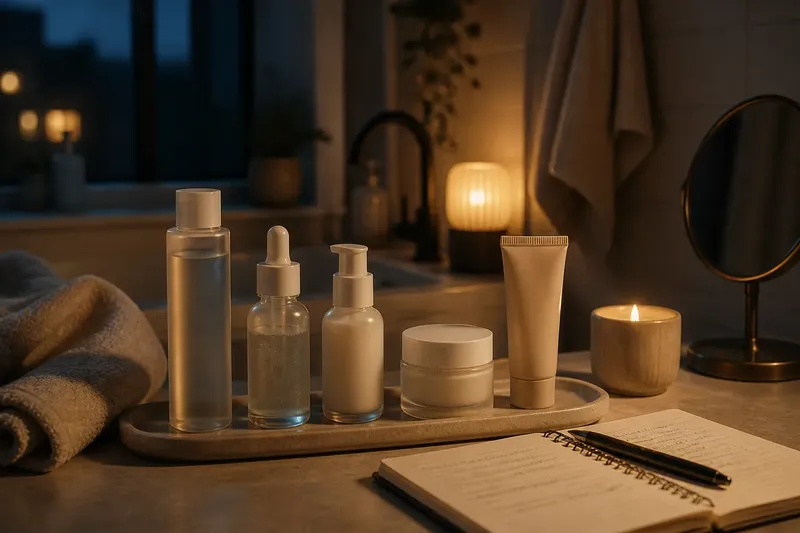
Skincare routine overload often starts with one extra bottle beside the sink, then another added to the evening. A routine feels easier to keep when its steps fit the time and space you actually have, rather than turning a quick wash into a sequence you dread.
Think of the routine like a coat hook: it works best when the things you reach for most are easy to find. You do not need to justify every product with a technical claim, but you can make clearer choices by noticing what gets used, what gets skipped and what makes the routine awkward.
Use a practical review to decide what stays in your routine
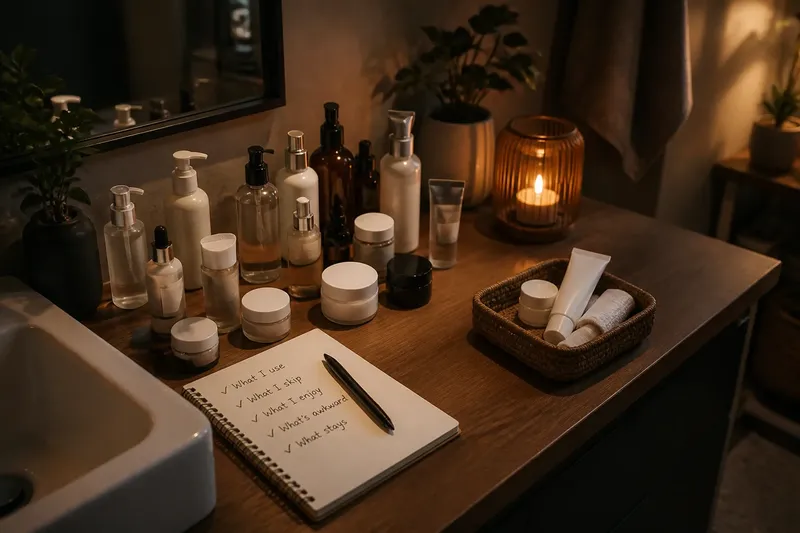
Set out the products you use in the morning or evening, along with a scrap of paper and a pen. For each item, write down when you reach for it and one observable detail: “used before work”, “cap is difficult with wet hands” or “enjoy the feel, but often forget it”. This is a record of your habits, not a score of your skin.
- Check whether you reached for the product during the routine you are reviewing. If you use it comfortably, keep it in that routine; if you usually skip it, move it to a separate place and decide whether it belongs in an occasional routine or can be set aside.
- Check whether you can describe the experience in plain words. If you value its feel or the ritual, keep it as an intentional pleasure; if you cannot say what you like about using it, pause the step and notice whether you miss it.
- Check whether another product already gives you a similar kind of experience. If both are enjoyable, choose the one that suits the time and texture you prefer; if one is routinely left untouched, remove it from the everyday sequence.
- Check whether the container or placement makes the step difficult. If moving it within easy reach solves the snag, try that; if the product remains awkward to use, consider whether it fits your habits.
- Check whether the step makes the routine feel longer or harder to remember. If you like the added ritual, keep it for the occasions when you have time; if it creates friction on an ordinary day, leave it out of that version.
- Check the product’s own directions and storage instructions before changing how you use or keep it. If the directions are clear, follow them; if they are missing or confusing, ask the manufacturer or a qualified professional where appropriate rather than guessing.
Make one change at a time so you can tell which adjustment affected the routine’s convenience. Keep your other familiar habits steady where practical, and note what you actually notice: perhaps you stop searching for a bottle, or perhaps you miss a texture you enjoyed. Neither result proves a medical effect; it simply helps you choose a routine that suits you.
Separate a chosen ritual from an automatic step
Habit is not a reason to reject a product, and pleasure is not a lesser reason to keep one. The useful distinction is whether you are choosing the step or repeating it without noticing. An enjoyable scent or texture can be a perfectly good part of a routine if you like having it there.
Say you use a facial mist after cleansing because it came in a set. Imagine that, for several ordinary mornings, you leave the mist aside but keep the rest of your familiar routine unchanged. If you miss the sensation, you might bring it back as a pleasant extra; if you do not miss it, you might reserve it for days when you want that ritual. This invented example illustrates a personal choice, not a test of the product.
Make an ordinary-day version and an unhurried version
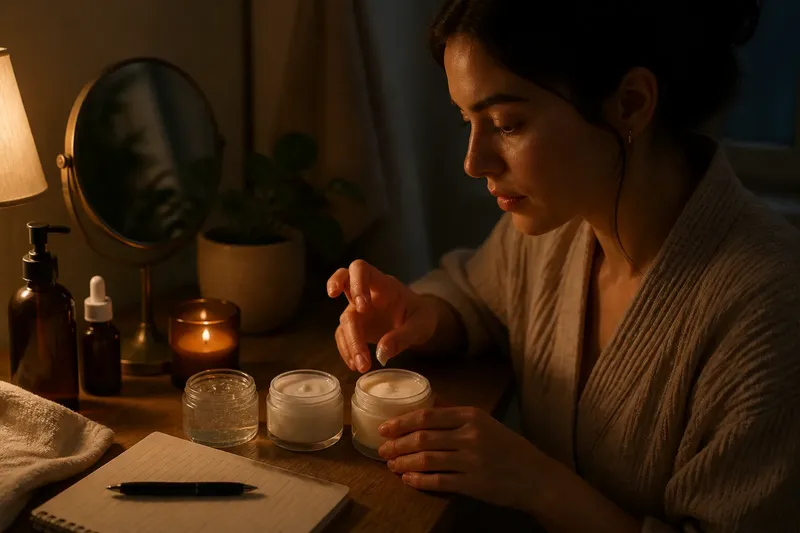
A routine you enjoy at the weekend may feel like a chore before work. Write two short sequences: one for an ordinary busy morning and another for a slower evening when you want more time. Put optional products in a small basket or drawer so they are available without becoming compulsory.
For instance, your short version might be the steps you already find easy to remember, while the longer version includes a moisturising texture or face mask you enjoy. Follow each product’s directions, and do not add a step simply to make either sequence look complete.
Resolve common questions about skincare routine overload?
How can I tell if a step is optional?
Notice whether you choose it, enjoy using it or miss it when it is absent from your routine. If you rarely reach for it and do not value its place, you can set it aside without needing to make a claim about its effects.
Should I change several products at once?
Changing one routine habit at a time makes it easier to notice what affects convenience or enjoyment. If you have a skin concern or reaction, seek advice from a qualified healthcare professional rather than using routine editing to diagnose it.
What should I do with a product I stop using?
Check its label and storage directions before deciding whether to keep, pass on or dispose of it. Follow the product’s instructions and local disposal guidance where relevant, and do not share it if its packaging or directions make sharing inappropriate.
Does a longer routine show more care?
No particular number of steps determines how thoughtful a routine is. A short sequence you choose comfortably can suit you better than a longer one that turns an everyday habit into an obligation.
Skincare routine overload is easier to address when you judge a routine by how it fits your day, not by how full the shelf looks. Keep the products you comfortably choose, make optional rituals easy to reach when you want them, and let a routine change as your habits do.