How to Choose a Skincare Texture You’ll Actually Use
Choose a skincare texture by how it spreads, settles and fits your routine, so you can make a more considered choice between gel, lotion and cream.

A skincare texture can determine whether a product feels easy to apply or becomes the one you keep passing over. Gel, lotion and cream describe broad formats, but the formula in the container matters more than the category name.
Rather than trying to match a texture to a label, notice practical details: how readily it spreads, whether it leaves a film, and how it works with the products you already use. Think of it like choosing a pen: the one that suits your hand is more useful than the one with the most impressive packaging.
Read the texture as a clue, not a promise
Gel, lotion and cream are useful starting points, not precise descriptions of how every product will feel. A gel may feel slick or tacky; a lotion may be fluid or surprisingly rich; a cream may spread thinly or leave a more noticeable coating.
If you can try a tester or sample, use a small amount and notice how it spreads and settles. If sampling is not an option, look for concrete words in the product description, such as “fluid” or “balm-like”, while remembering that descriptions cannot reproduce the feel on your own skin.
- Gel: Often has a smooth, fluid feel. If you prefer a less rich sensation, consider it; if you dislike tackiness, look for a tester or a description that addresses the finish.
- Lotion: Often spreads easily and can sit between a light gel and a richer cream in feel. If you want a middle ground, compare its stated texture with a product you already know; if it sounds too rich, look for a more fluid option.
- Cream: Often feels more substantial during application. If you enjoy a noticeable, cushioned layer, consider it; if you prefer a lighter finish, look for a lighter-feeling cream or another format.
Choose gel, lotion or cream by the job it needs to do
Start with the moment in your routine rather than a broad skin-type label. Ask what you want the product to feel like while applying it and afterwards, and whether you want it to sit lightly or feel more present.
A gel may suit someone who dislikes a rich sensation, but the label does not rule out a tacky finish. A lotion can be a useful middle option, though some formulas feel quite substantial. A cream may appeal if you like a more noticeable layer, but the word alone cannot tell you how quickly it spreads or settles.
Consider the practical setting too. A product used in a hurry may be easier to reach for if it spreads readily; one you apply more slowly may be pleasant in a richer format. These are preferences about handling and feel, not promises about what a product will do for your skin.
Compare the formula with products you already know
When descriptions are vague, use a familiar product as a reference point. Compare how each one leaves your fingers after spreading, whether it feels sticky or slippery, and whether you notice a layer once you have finished applying it. These observations are more useful than assuming two products with the same label will behave alike.
Say you have a gel that feels tacky and a lotion described as fluid. You could try the lotion sample on one ordinary routine occasion, leave the rest of your routine unchanged, and notice whether its finish feels less distracting. The resulting decision is simply whether that particular lotion suits your preference better; it does not establish that lotions as a group are lighter.
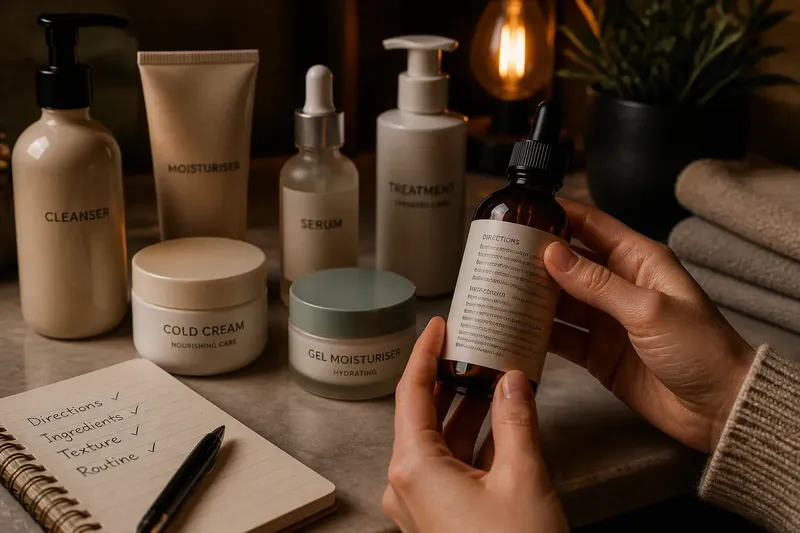
It can also help to consider the container. A pump may be convenient if you prefer dispensing a fluid formula with one hand; a jar may suit you if you do not mind opening it and scooping out product. Packaging varies, so treat this as a handling preference rather than evidence of the texture inside.
Which texture questions help narrow the choice?
What should I try if I dislike a sticky finish?
Look for a product description that specifically mentions its finish, or try a sample if available. A gel is not automatically non-sticky, so judge the individual formula rather than relying on the format name.
Is lotion always lighter than cream?
No. The words suggest broad formats, but formulas differ, and a light cream may feel less substantial than a dense lotion. Compare the product descriptions or samples directly if the distinction matters to you.
Can I choose texture without following a skin-type label?
You can treat a label as one piece of product information rather than a rule about what you must enjoy. Follow the product’s directions, and ask a qualified professional if you have a health concern or need advice tailored to your skin.
How can I compare two products fairly?
Keep your usual routine and application method the same, and compare one product at a time. Notice spread, after-feel and ease of handling, then choose the one that better suits your preferences.
Make the decision from specific observations
Before choosing, check the details that affect your everyday experience. Each answer points to a practical next move:
- If the description says “light” but does not mention finish, then look for a sample or more specific product information; if neither is available, treat the feel as uncertain and consider another option.
- If a tester feels tacky after spreading, then set it aside if tackiness bothers you; if you do not mind that sensation, keep it in consideration.
- If a lotion sample feels more substantial than you want, then look for a more fluid lotion or gel; if you like its finish, the lotion may suit your preference.
- If a cream spreads comfortably but leaves more of a layer than you enjoy, then compare a lighter-feeling cream or lotion; if the layer feels pleasant, there is no need to rule it out.
- If two products feel similar but one is easier to dispense, then favour the easier container if convenience matters to you; if both are equally convenient, decide by their after-feel.
- If the product directions conflict with your intended use, then follow the directions or ask a qualified professional where health concerns are involved; if the directions fit your routine, assess the texture on its own merits.
Let the individual formula settle the choice
Gel, lotion and cream can help you narrow the shelf, but they cannot predict the feel of a specific product. Compare the description, handling and finish, and keep the rest of your routine familiar while you decide.
The best skincare texture for your routine is the one whose actual feel and practical details suit you. If you are unsure, a sample or a clearer product description can help you make a more informed choice without turning a simple preference into a complicated project.